JD Vance goes on Rogan and Accuses Israel of Undermining the Iran Deal "Beyond a Shadow of a Doubt"— but Offers No Evidence
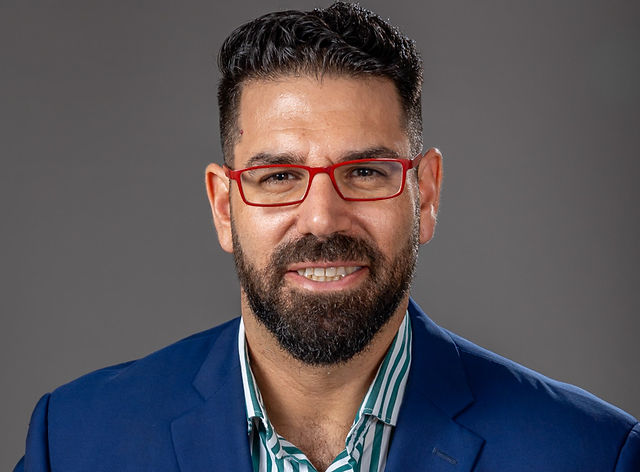
On Joe Rogan, the vice president claimed unnamed Israeli officials manipulated Americans to prolong the war with Iran. His certainty was absolute. His public evidence was nonexistent.
By Dan Feferman

When the vice president of the United States says he knows something “beyond a shadow of a doubt,” the public should expect evidence. JD Vance offered none.
Speaking on The Joe Rogan Experience (July 15), Vance accused unnamed officials inside the Israeli government of manipulating American public opinion against the Trump administration’s agreement with Iran. According to Vance, these officials wanted to derail the deal because “they want to continue the military campaign.” He then went further, alleging that “people within their system” were trying to keep the war going indefinitely.
It was an extraordinary charge: officials from a close American ally were secretly manipulating Americans to prolong a war.
Yet Vance did not identify a single official, document, communication or specific act of deception. He used the language of a criminal verdict while offering the public nothing it could independently examine.
Vance is not another podcast guest speculating about hidden influence. He is the vice president. When he makes an accusation this serious, personal certainty is not proof.
What JD Vance Said About Israel on Joe Rogan
The setting made Vance’s remarks even more striking. His conversation with Rogan had already moved through Jeffrey Epstein, intelligence connections, elite impunity and hidden networks. Vance then carried that atmosphere of suspicion into the debate over Israel and the Iran deal.
Israel’s opposition to the agreement was never secret. Israeli officials openly argued that it failed to sufficiently limit Iran’s nuclear program, ballistic missiles and regional proxies—concerns shared across much of Israel’s political and security establishment.
Vance was entitled to reject that assessment. He could have argued that Israel’s strategy conflicted with American interests or risked pulling the United States into another prolonged Middle Eastern war. That would have been a legitimate policy argument.
Instead, Vance moved from criticizing Israel’s position to accusing unnamed Israelis of covertly manipulating Americans. He did not merely say Israel was lobbying hard or advocating aggressively. He suggested hidden subversion by “people within their system.”
That is not a semantic distinction. It is the difference between disagreeing with an ally and accusing that ally of secretly corrupting American decision-making.
Israel’s Opposition to the Iran Deal Was Public
Of course Israel attempts to influence American policy. So do Saudi Arabia, Qatar, Turkey, the United Arab Emirates, Ukraine, Britain and nearly every government with serious interests in Washington. They meet officials, brief lawmakers, speak to journalists, hire lobbyists and appeal directly to the American public. This is not a revelation - It is diplomacy.
The real question is what Israeli officials supposedly did that crossed the line from advocacy into manipulation. Did they spread false information? Secretly finance a deceptive campaign? Fabricate intelligence? Direct concealed political activity? Vance gave no answer.
Without identifying the conduct, “manipulating American public opinion” becomes an elastic accusation that can describe almost any argument he dislikes. Persuasion does not become manipulation simply because it is effective. Advocacy does not become sabotage because it complicates the administration’s preferred policy.
Israel publicly warned that the agreement could leave Iran capable of rebuilding its nuclear program. Those arguments may be correct, exaggerated or wrong. But they are public claims that can be examined and challenged. Labeling them manipulation is a way of avoiding that debate.
JD Vance Offered Certainty, Not Evidence
Vance may possess intelligence unavailable to the public. That is the strongest defense of his remarks—but it does not settle the issue.
If Vance has credible evidence of an Israeli operation to deceive Americans and prolong the war, the administration should address it through official channels. If he instead announces the accusation on one of the world’s largest podcasts, he owes the public enough specificity to distinguish an intelligence-based warning from political innuendo.
He does not need to expose classified sources or methods. He does need to explain the nature of the alleged conduct, who was targeted and how it differed from the open advocacy in which allies routinely engage.
Otherwise, the accusation becomes impossible to test. Neither Israel nor the American public can meaningfully answer a charge constructed entirely from unnamed actors and undisclosed information. That is not transparency but an uncheckable allegation delivered with maximum confidence on one of the world's biggest stages.
Vance’s Claim Denies American Agency
There is another problem with Vance’s argument: it diminishes the agency of his own country. The United States negotiated with Iran for its own reasons: preventing a nuclear weapon, avoiding a prolonged war, protecting energy markets and limiting another military entanglement.
American critics also questioned whether Iran could be trusted, whether the restrictions were enforceable and whether the deal addressed Tehran’s missiles and proxies. Those objections did not need to be manufactured in Jerusalem - Iran's leaders have earned such mistrust with great care and much effort.
Israel has an obvious reason to oppose an agreement it considered inadequate. Iran threatens Israel, arms groups on its borders (including in the Palestinian areas) and develops capabilities Israeli leaders view as existential dangers. One can dispute Israel’s conclusions without pretending its concerns were invented to keep America at war.
Vance’s framing replaces a difficult policy dispute with a politically convenient story: the Trump administration pursued peace, while shadowy foreign actors tried to drag the United States back into conflict. But Washington is not a puppet, and Americans who opposed the Iran deal were not necessarily dupes. Ironically, an accusation supposedly made in defense of American sovereignty ends by denying Americans the ability to reach their own conclusions.
When Israel Criticism Becomes Conspiratorial Innuendo
Criticism of Israel is not antisemitic. Israeli governments can act unwisely, pressure allies too aggressively and pursue policies that conflict with American interests. Treating every dispute with Israel as prejudice would make serious foreign-policy debate impossible. But criticism is not what makes Vance’s language troubling.
The problem is the image he created: unnamed people inside Israel’s “system” operating behind the scenes to manipulate Americans and prolong a war. That language echoes a familiar narrative in which Jewish or Israeli influence works invisibly, overrides American interests and pushes the United States into conflicts it would not otherwise choose.
That does not prove Vance intended to promote an antisemitic message. It does mean he had a responsibility to speak with exceptional precision. Instead, he invited millions of listeners to imagine a hidden Israeli network without explaining who participated, what it did or how he knew.
Once opposition to an Iran agreement is attributed to secret Israeli manipulation, any journalist, donor, lawmaker or American supporter of Israel can be recast as part of the same undefined operation. A debate over nuclear policy becomes a suspicion about loyalty. That is how legitimate disagreement slides into conspiratorial innuendo.
Judge the Iran Deal on Its Merits
The greatest irony is that Vance’s accusation distracts from the questions that actually matter.
Does an Iran agreement impose meaningful and verifiable limits on Tehran’s nuclear program? Does it address ballistic missiles and regional proxies? Could Iran evade its restrictions or rebuild its capabilities? Does the deal reduce the danger of war—or merely postpone it?
With hostilities between Iran and the United States now resumed, those questions have become more urgent, not less. Israel’s objections can be scrutinized. So should the Trump administration’s reasons for pursuing the agreement. But the Iran deal should rise or fall on its provisions and results—not on an unproven story about hidden Israeli influence.
Vance is entitled to defend the agreement. He is entitled to reject Israeli pressure and insist that American policy be made in Washington. But accusing unnamed Israeli officials of secretly manipulating Americans to keep a war going indefinitely is something else.
If the vice president has evidence, he should provide enough of it for the accusation to be evaluated. If he cannot, he should stop presenting insinuation as certainty.
Dan Feferman is the co-editor of Middle East24 and the editor of MidEast Journal. He is a former foreign policy advisor in the Israel Defense Forces and publishes and speaks regularly in international media.