Why Nicholas Kristof’s NYT Column Appeared Just Before the Hamas October 7 Sexual Violence Report
Updated: May 21
A major report documenting Hamas sexual violence during the October 7 attacks was overshadowed by a New York Times column featuring disputed allegations against Israel.
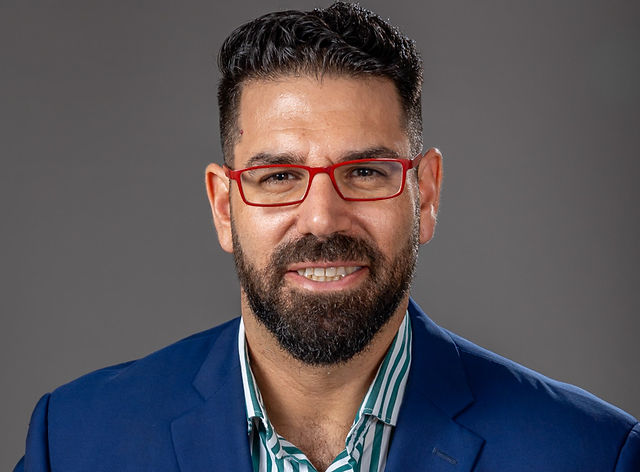
By: Dan Feferman

a New York Times newspaper with Nicholas Kristof's column clashing against the official Hamas sexual violence report.
Just days before the release of a major report documenting Hamas sexual violence during the October 7 attacks, the New York Times published a Nicholas Kristof column alleging widespread sexual abuse by Israeli personnel against Palestinians. The timing raised immediate questions.
The Hamas report, titled Silenced No More, was the result of more than two years of evidence collection, forensic review, and testimony analysis by the Civil Commission on October 7th Crimes by Hamas Against Women and Children. Yet the New York Times devoted greater immediate attention to allegations against Israel that included disputed testimony and claims lacking independent verification. The juxtaposition revealed more than competing narratives. It highlighted how information warfare, media timing, and emotional counterprogramming increasingly shape international perceptions of the Israel-Hamas conflict.
The “Silenced No More” Hamas Sexual
Violence Report
The more substantial document came from the Civil Commission on October 7th Crimes by Hamas Against Women and Children. Led by Dr. Cochav Elkayam-Levy, the effort produced a nearly 300-page report titled Silenced No More.
Researchers examined more than ten thousand photographs and video segments, conducted over 1,800 hours of visual analysis, and drew on hundreds of interviews. The commission identified thirteen distinct patterns of sexual and gender-based violence that were systematic, widespread, and integral to the October 7 attacks.
Victims spanned dozens of nationalities. The work carried endorsements from figures with deep experience in international justice, including former prosecutors and jurists who had handled war crimes cases elsewhere. Its central finding was straightforward: Hamas and its collaborators treated sexual violence as a calculated tactic to maximize suffering, not as random excess.
What Nicholas Kristof Alleged
That report reached news organizations under embargo days earlier. The New York Times showed little interest in highlighting it. Instead, on May 11, the paper published Nicholas Kristof’s lengthy opinion column alleging widespread sexual abuse of Palestinians by Israeli prison guards, soldiers, settlers, and interrogators. The piece included accounts of beatings to the genitals, objects used in assaults, and the claim that a Gaza journalist had been held down, stripped, and penetrated by a dog on the command of handlers speaking Hebrew while cameras recorded the scene. Kristof acknowledged the absence of evidence that Israeli leaders ordered rapes. Yet he presented the incidents as evidence of a standing security apparatus in which such violence had become routine.
Problems With the Evidence Presented
Three elements in the column stand out as particularly unreliable.
The Issa Amro Contradictions
Kristof presented Issa Amro, a Hebron activist, as one of the named sources describing sexual assault during detention. Yet Amro had reportedly given a different account of the same October 7 episode months earlier to another major outlet, describing threats of sexual assault during a roughly ten-hour detention rather than completed rape. The column offered no new evidence or explanation for the shift. Amro’s legal record includes convictions in Israeli military court on charges related to demonstrations and obstruction. His story changed in ways that aligned with the column’s broader narrative but contradicted his own prior statements about the identical event.
The Sami al-Sai Testimony Changes
Second, the account attributed to Sami al-Sai, identified as a freelance journalist.
Earlier testimony he provided to B’Tselem described rough handling and the insertion of “something hard” during detention. Kristof’s version introduced new, highly specific and graphic details like sodomy with carrots, forceful grabbing of the genitals, and the presence of other people’s vomit, blood, and broken teeth on his skin. These particulars did not appear in the prior record. Al-Sai had also posted celebratory messages praising Hamas fighters and the “green flag” across the West Bank in the immediate aftermath of the October 7 massacres, while bodies were still being recovered from the kibbutzim.
The column presented his testimony without that context or any independent corroboration of the added lurid elements.
The Dog-Rape Allegation
Third, the dog-rape allegation itself. It originated with reporting tied to Euro-Med Human Rights Monitor, an organization critics have linked to Hamas advocacy networks.
The claim that Israeli handlers directed a dog to mount and penetrate a bound, blindfolded prisoner while filming lacks forensic support, multiple corroborating witnesses, or any demonstrated operational feasibility. Training dogs for such acts, equipping them with cameras, and coordinating the scene under the conditions described strains basic logistics and biology. Similar assertions have circulated in activist channels for months without independent verification. Kristof nevertheless elevated the story to a prominent place in one of America’s most influential newspapers despite these weaknesses and despite his own caveat about the lack of leadership direction.
Criticism Versus Credibility
No one is claiming that Israel is perfect, or that its treatment of Palestinian prisoners is beyond criticism. No country in the world can make such a claim. When Israel hears accusations of abuse, it investigates them. But the claims highlighted by Kristof lack credibility and, in several cases, appear built on altered testimony, weak sourcing, or sensational allegations unsupported by independent verification.
Why the Timing Matters
The New York Times did not merely host an opinion column. Its news operation had advance access to the Civil Commission’s embargoed findings yet chose to run this counter-narrative instead. When Israel’s government signaled plans to pursue legal action over the column, the paper defended the piece and stood by its standards.
This pattern of rapid amplification of allegations against Israel paired with slower or more skeptical engagement with documentation of Hamas crimes has recurred across years of coverage. Opinion and news functions reinforced each other here. The column dominated attention in the critical window before the more rigorous report entered public view.
Qatar, Hamas, and Narrative Management
This episode fits a recognizable mechanism. Qatar serves as Hamas’s primary state patron and maintains extensive influence operations through media properties, academic funding, and lobbying. Iran supplies strategic direction and resources to the same axis. When evidence of Hamas atrocities threatens to consolidate international focus, the network activates proxies and aligned outlets to inject competing claims. The goal is not always outright fabrication from scratch. It is to create volume, equivalence, and exhaustion.
Parallel accusations force rebuttals, generate “both sides” framing, and shift the burden onto Israel to disprove sensational charges while the original crimes recede from the immediate spotlight.
The Information Warfare Strategy
Hamas has long understood the asymmetry in Western media attention.
The Israeli-Palestinian conflict receives sustained, granular scrutiny that few other conflicts match. That obsession creates predictable demand for stories portraying Israel as uniquely or systematically abusive. Hamas and its supporters supply material calibrated to that demand through sympathetic NGOs, activist networks, and selective testimony, knowing that certain legacy outlets will apply lighter skepticism than they would to equivalent claims against the terrorist group itself. The result is narrative oxygen for distraction precisely when documentation of Hamas’s own record is about to land.
The Larger Historical Record
One document assembles a prosecutable, historically durable record grounded in extensive evidence and expert review. The other competes for attention with uncorroborated or altered testimony and biologically implausible details. Their juxtaposition in a single news cycle reveals less about competing realities than about the deliberate management of public attention. The serious work will continue to inform legal proceedings and scholarship. The column’s primary service was to occupy the information space in the hours before that work could take hold.
Dan Feferman is the co-founder and co-editor of MiddleEast24 and MidEastJournal. He is a veteran analyst and policy scholar of MiddleEast affairs, antisemitism, narrative warfare and radical ideologies. You can follow him at @danfeferman