Hamas Says It Will Disarm in Gaza. But Will It Really Give Up Its Weapons?

Hamas has accepted a framework for disarmament. Israel has now rejected the 15-point plan built around it. Is this a historic opening, a face-saving formula for Hamas to admit defeat or simply another strategy to buy time, preserve power and survive?
By Dan Feferman and Moataz Khalil
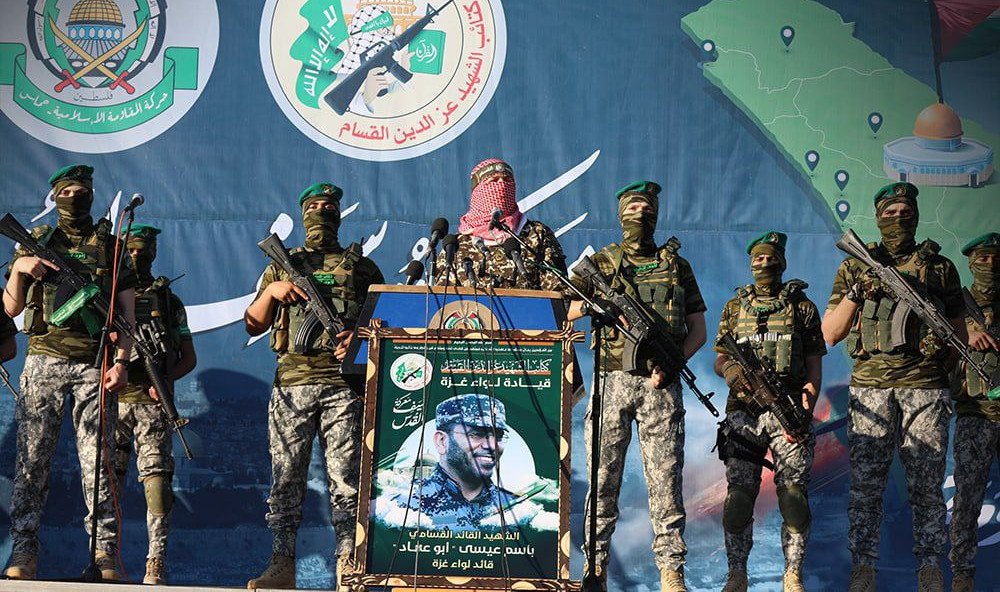
For nearly four decades, Hamas has built its identity around one central idea: resistance. Its weapons were never merely instruments of war against Israel. They became the source of its legitimacy, the foundation of its political power in Gaza and the physical expression of its claim to lead the Palestinian struggle. Now, suddenly, Hamas says it is prepared to give them up.
But even before that promise could be tested, the diplomatic framework built around it ran into a fundamental obstacle. On Sunday, Prime Minister Benjamin Netanyahu announced that Israel was rejecting the U.S.-backed Board of Peace’s 15-point Gaza plan, insisting that Israeli forces would not withdraw until Hamas was genuinely disarmed. Hamas, by contrast, has accepted the framework, which seeks to connect its disarmament to a phased Israeli withdrawal and the transfer of governing and security responsibilities in Gaza.
At first glance, this may look like another dispute between Netanyahu and Washington over how to end the Gaza war. But beneath that disagreement lies the far more consequential question that could determine whether any post-war arrangement survives: what does it actually mean to disarm Hamas?
Hamas has now done something that would have appeared almost unthinkable not long ago: it has accepted a political framework explicitly built around the surrender of its weapons. Netanyahu’s objection is therefore no longer that Hamas simply refuses to discuss disarmament. It is that Israel does not trust a process that could require it to relinquish military leverage before Hamas’s military capabilities have actually disappeared.
That distinction takes us to the heart of the issue. Has Hamas finally concluded that its armed project has reached the end of the road? Is the carefully negotiated language a face-saving mechanism that allows the organization to surrender its arsenal without publicly acknowledging defeat? Or is Hamas doing what it has done before—accepting flexible political language under intense pressure, surviving the immediate crisis and waiting for circumstances to change?
There is an enormous difference between Hamas agreeing to disarm and Hamas actually becoming disarmed. The first requires a political decision and a signature. The second requires Hamas to give up not only weapons, but the military power around which it has built its identity and its rule of Gaza. Netanyahu’s rejection of the 15-point plan has now placed that distinction at the center of the entire diplomatic process.
Whether it can be resolved may determine whether Gaza is genuinely entering a new political era or simply another pause before the next confrontation.
Hamas Has Changed Its Language Before
This would not be the first time Hamas has altered its political language without fundamentally abandoning its objectives. In 2017, the organization issued a new political document that appeared to moderate several positions associated with its original 1988 charter. It accepted the establishment of a Palestinian state along the 1967 lines as a possible formula for national consensus and removed some of the explicitly antisemitic rhetoric of the earlier charter.
Yet Hamas did not recognize Israel, renounce armed struggle or abandon its broader territorial claims. It continued to define itself through the concept of resistance and maintained armed struggle as a legitimate means of pursuing Palestinian national goals. The presentation became more sophisticated and the language more acceptable to an international audience, but the central role assigned to armed resistance remained intact.
This history matters because Hamas has repeatedly demonstrated that tactical flexibility is not the same thing as ideological surrender. As Mideast Journal examined recently in Why Hamas Won’t Give Up Its Weapons, the movement’s arsenal has long been bound up not only with its conflict with Israel, but with its political survival and its place within a wider regional network.
The question today is therefore not simply whether Hamas is willing to use the word “disarmament,” but what it believes it has actually agreed to surrender. Does this include rifles and rockets, tunnel networks and weapons factories, military command structures and internal security forces? Does Hamas accept that it will permanently lose the ability to rebuild those capabilities when political conditions become more favorable, or is it surrendering the weapons of today while preserving the people, networks and knowledge necessary to recreate them tomorrow?
Those distinctions will determine whether this agreement represents an actual transformation or simply another phase in Hamas’s strategy.
For Hamas, Weapons Mean Power
The argument over Hamas’s arsenal is usually framed as an Israeli security question. It is that, but it is also fundamentally a Palestinian political question. Hamas did not maintain control over Gaza after its violent takeover of the Strip in 2007 simply because it administered ministries, distributed welfare or enjoyed political support. It ruled because it possessed the strongest organized armed force in the territory.
Those weapons gave Hamas the ability to wage war against Israel, but they also allowed it to intimidate rivals, suppress opposition and prevent alternative Palestinian institutions from seriously challenging its authority. For Hamas, therefore, weapons have never been only about confronting an external enemy. They have also been the ultimate guarantee of domestic political power.
This is why genuine disarmament would involve much more than collecting rockets and assault rifles. It would require Hamas to accept that another Palestinian authority—not Hamas—has the final say over the use of force in Gaza. In practical terms, it would mean abandoning a political order in which the faction with the largest militia ultimately possesses the greatest veto over everyone else.
That question has become even more important as Hamas has shown itself willing to transfer formal governing responsibilities to a technocratic administration. As co-author Moataz Khalil recently argued in Mideast Journal, giving up the administrative burden of governing Gaza is not necessarily the same thing as giving up power. Hezbollah demonstrated for years in Lebanon how an armed movement could operate through formal political institutions while retaining an independent military structure capable of overriding them.
That is precisely the model Gaza must avoid. A technocratic government that collects garbage, repairs roads and administers foreign reconstruction funds while Hamas retains guns, commanders and the ability to intimidate its political opponents would not represent a real transfer of power. It would merely divide civilian responsibility from military authority.
Previous efforts to rebuild Gaza offer another warning. Following the 2014 war, an international donor conference in Cairo pledged approximately $5.4 billion in assistance to the Palestinians, with roughly half intended for Gaza reconstruction. Yet reconstruction unfolded alongside rearmament. Hamas rebuilt tunnels, restored rocket capabilities and continued directing significant resources and manpower toward preparations for future confrontation.
Whatever one’s views regarding the blockade, Israeli and Egyptian restrictions or Gaza’s desperate economic circumstances, the contradiction became impossible to ignore. Gaza needed enormous investment in housing, infrastructure and economic development while its rulers were simultaneously investing in the military infrastructure for another war. Today that same question returns on a vastly larger scale: can billions of dollars be poured into rebuilding Gaza while an armed organization retains the capability to destroy what is being rebuilt?
Netanyahu’s Rejection Puts the Meaning of Disarmament at the Center
This is where the current dispute over the 15-point plan matters.
Netanyahu’s rejection does not necessarily mean Israel rejects the principle of a negotiated postwar arrangement. His stated objection is that Israel will not withdraw its forces before Hamas is genuinely disarmed. The Board of Peace framework, meanwhile, seeks to move disarmament, verification, Israeli withdrawal and the transfer of security authority forward through an agreed process.
The argument is therefore partly about sequencing, but sequencing in this case is inseparable from trust. Israel fears withdrawing first and discovering later that Hamas surrendered only part of its arsenal. Hamas, for its part, has little incentive to surrender everything while Israeli forces remain in position without guarantees that withdrawal will follow.
This is where the current agreement will either become historic or collapse into diplomatic theater. The challenge is not simply deciding where Hamas fighters deposit their rifles. It is determining whether anyone can reliably know what Hamas actually possesses and whether the organization has genuinely lost its ability to regenerate military power.
Someone must account for concealed weapons and underground arsenals, dismantle tunnels and weapons-production infrastructure, and determine what becomes of Hamas’s internal security apparatus. There must be a way to deal with undeclared weapons discovered months or years later, as well as the possibility that former commanders and fighters could reconstruct the organization under another name.
Verification therefore cannot be treated as some technical appendix to the political agreement. It is the heart of the agreement.
A militant organization does not need to preserve every rocket or every tunnel in order to survive militarily. It needs to preserve enough trained people, engineering expertise, financial networks, weapons caches and organizational infrastructure to rebuild. If those survive, the destruction or surrender of a large number of visible weapons may prove far less meaningful than it appears.
At the same time, the agreement does not need to humiliate Hamas in order to succeed. Some degree of ambiguity may be precisely what is required to allow an armed movement to surrender without formally declaring defeat. Hamas may need to tell its supporters that it preserved Palestinian dignity, while Israel needs to tell its public that the military threat has genuinely been removed. There is nothing unusual about diplomacy providing each side with language it can live with.
But there is a critical difference between ambiguity that allows Hamas to save face while surrendering its power and ambiguity that allows Hamas to save its power while pretending to surrender.
Netanyahu’s rejection of the plan demonstrates that Israel does not yet believe that distinction has been adequately resolved.
Gaza Cannot Simply Trade Hamas for More Militias
There is another complication that receives far less attention. Hamas is no longer the only armed Palestinian actor whose future must be resolved. During the war, competing militias, clan networks, criminal organizations and anti-Hamas factions emerged across Gaza. In June 2025, Netanyahu publicly acknowledged Israeli support for Palestinian clans opposed to Hamas, including forces operating in areas outside Hamas’s effective control.
This may have weakened Hamas’s monopoly on force, but weakening that monopoly is not the same thing as creating legitimate government. If Hamas is disarmed while Gaza fragments among rival clans, militias, criminal networks and politically sponsored armed factions, the result will not be demilitarization. It will simply be fragmentation.
The Middle East provides more than enough warnings of where that can lead. Lebanon has spent decades living with the consequences of formal state institutions existing alongside Hezbollah’s independent military power. Other states in the region have fractured even further, with governments forced to negotiate constantly with militias, tribes and armed political movements that retain their own weapons and chains of command.
Gaza does not need its own version of that model. The objective cannot simply be a Gaza without Hamas’s weapons. It must eventually be a Gaza in which no political faction maintains an independent army and in which one accountable Palestinian security structure is responsible for maintaining public order. Otherwise, removing Hamas’s military dominance may simply replace one armed problem with several others.
Iran Has Every Reason to Oppose Hamas’s Disarmament
Then there is Tehran. Only days after the new disarmament framework emerged, Iran’s Islamic Revolutionary Guard Corps publicly dismissed attempts to disarm Hamas as doomed to failure. The timing was revealing. While international negotiators were trying to work out how Hamas might surrender its weapons, the state that spent years helping sustain its military capabilities was already insisting that the effort would fail.
Iran’s role in Hamas’s military development is well established. The United States Treasury has documented networks connecting the IRGC-Quds Force with Hamas and Palestinian Islamic Jihad through financing and other forms of support. For Tehran, Hamas has never been simply another Palestinian political organization. It formed part of a wider strategy of maintaining armed pressure on Israel through allied movements across Gaza, Lebanon, Syria, Iraq and Yemen.
A genuinely demilitarized Hamas would therefore mean more than a transformation of Palestinian politics. It would represent a significant strategic setback for Iran and for the regional model it spent decades constructing. Tehran consequently has every incentive to see the process fail—or, perhaps more realistically, to see Hamas surrender enough weapons to survive politically while retaining sufficient personnel, financial networks and organizational infrastructure to rebuild when conditions change.
That is another reason the disarmament process cannot be judged by the number of weapons handed over in the coming months. If the machinery that allowed Hamas repeatedly to regenerate its military capabilities remains intact, the arsenal can eventually be recreated.
The Palestinian Debate Over “Resistance”
There is also a Palestinian debate that is too often drowned out by the much louder argument between Israelis and Palestinians. Palestinian-American analyst Ahmed Fouad Alkhatib of the Atlantic Council grew up in Gaza and has lost more than 30 members of his extended family during the war. He has sharply criticized Israeli conduct in Gaza while simultaneously becoming one of Hamas’s most outspoken Palestinian critics.
His position matters precisely because it rejects the false choice that dominates so much of the conversation: that sympathy for Palestinians requires defending Hamas, or that condemning Hamas requires indifference to Palestinian suffering. Alkhatib has argued publicly that Palestinians must speak out against Hamas and that its strategy has been disastrous for Palestinian aspirations.
That debate ultimately reaches beyond Hamas itself. Can Palestinian politics move away from an understanding in which “resistance”—and particularly armed resistance—is treated as a higher form of legitimacy than governance, elections, institution-building and improving ordinary people’s lives? Or will whichever faction presents itself as the most uncompromising armed movement always possess a political advantage over those attempting the slower, less dramatic work of building functioning institutions?
If that political culture does not change, physically disarming Hamas may solve only part of the problem. Another organization can eventually adopt the same model under another name. A sustainable Palestinian future requires something more difficult: demonstrating that national dignity can come from building a successful society rather than permanently preparing that society for another war.
So, Is Hamas Really Disarming?
There are genuine reasons to believe that something important may have changed. Hamas is weaker than it has been in years, Gaza has suffered enormous destruction, the regional balance has shifted and the organization faces pressure not only from Israel and the United States but from Arab governments and Palestinians exhausted by war. Hamas may have concluded that preserving a political or social role now requires sacrificing its formal military structure.
That possibility should not be dismissed. The fact that Hamas is prepared to accept a framework explicitly built around disarmament is itself significant for an organization whose identity has been inseparable from armed resistance. Military pressure, regional diplomacy and the destruction in Gaza may finally have forced Hamas to confront a choice it successfully avoided for decades: preserve the gun or preserve the movement.
But neither should diplomatic language be confused with reality. From Hamas’s perspective, the ideal outcome could be to surrender enough visible weaponry to satisfy international mediators, preserve enough organizational infrastructure to remain politically relevant, allow reconstruction to begin and then wait. Governments change, international attention shifts, inspectors eventually leave and new money and materials flow into Gaza. For an organization accustomed to thinking in decades rather than election cycles, time itself is a strategic asset.
Perhaps the ambiguity in the current agreement is simply the price of diplomacy. Hamas may need language that allows it to surrender without formally announcing defeat, while Israel needs guarantees that withdrawal will not simply recreate the military threat that existed before October 7. If carefully constructed ambiguity allows both sides to cross that bridge while Hamas genuinely relinquishes its military capability, then face-saving language may prove to be a feature rather than a flaw.
Netanyahu’s rejection of the 15-point plan shows just how difficult that balance will be. Israel is effectively saying that promises, procedures and future verification are not enough; disarmament must become a fact before Israel gives up the military leverage that could compel it. Hamas, meanwhile, is unlikely to surrender its last remaining source of leverage without confidence that Israeli withdrawal will actually follow.
Between those two positions lies the possibility of a real agreement.
But there is another possibility: the ambiguity may itself be the strategy.
That is why the international community should ultimately judge Hamas’s disarmament not by the agreement it signs, the declarations its leaders issue or even photographs of fighters handing over their rifles. The real test is what remains once the cameras disappear, reconstruction begins and international attention inevitably moves elsewhere.
Five years from now, does Hamas—or an organization that has replaced it—still possess an independent military capability capable of coercing Palestinians, threatening Israel or initiating another war?
If the answer is yes, Hamas was never truly disarmed. It was simply given time.
Moataz Khalil is an Egyptian, London-based journalist and media researcher on Middle East affairs. He is a senior contributor to MiddleEast24 and MidEast.Journal and has written for media platforms across the Middle East.
Dan Feferman is the co-editor of Middle East24 and the editor of MidEast Journal. He is a former foreign policy advisor in the Israel Defense Forces and publishes and speaks regularly in international media.