Why The ‘Free, Free Palestine’ Movement Isn’t Helping

Updated: 2 days ago
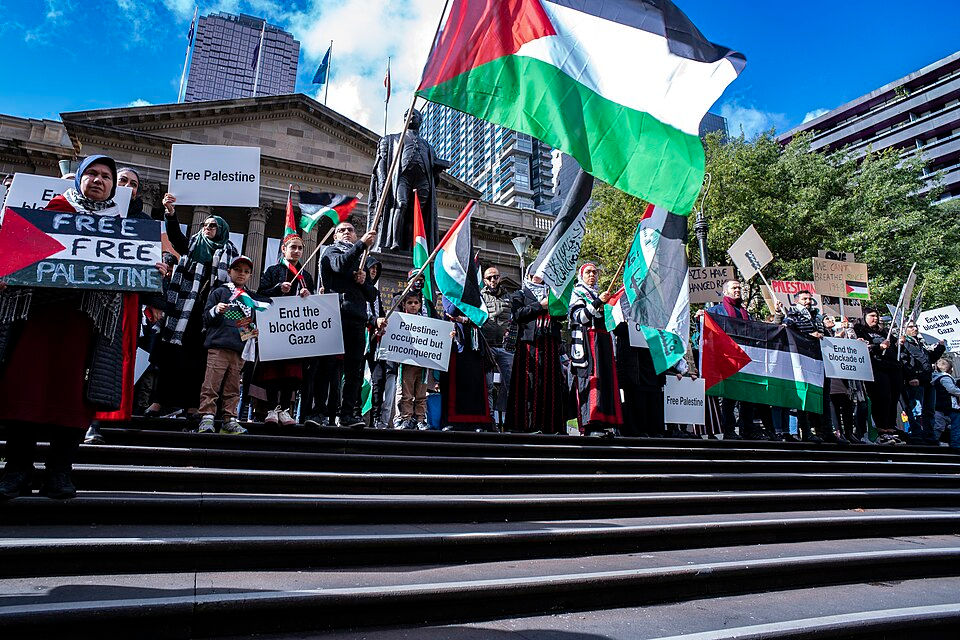
According to “The People’s Forum,” on October 8, thousands of New Yorkers gathered in Times Square to stand in solidarity with Palestine. The rally took place a day after Palestinian resistance factions in Gaza initiated an unprecedented liberation struggle, the “Al-Aqsa Flood,” in response to accelerating attacks on Palestinians in Jerusalem and the West Bank, and in defiance of Israel’s efforts to ghettoize, besiege, starve, and suffocate the people of Gaza into total submission.”
Images from the rally show “Free Palestine” signs as well as signs accusing Israelis of being Nazis. The rally described above took place one day after Hamas’s massacre of 1,200 from southern Israel, the kidnapping of 250 people into Gaza, and the rape and injury of thousands of innocent people.
Tensions ran high at the rally as Israeli and Palestinian groups faced off. The Israeli group chanted “The people of Israel live” in Hebrew, and the pro-Palestinian group shouted back Free Palestine. Some Palestinians made mock crying gestures toward the pro-Israel group to taunt them.
Since October 8, 2023, there have been thousands of Free Palestine rallies, protests, and demonstrations around the world. The Free Palestine movement, while rooted in a grievance to win Palestinians their own state, ultimately harms Palestinians by prioritizing symbolic outrage over pragmatic solutions, alienating allies, and empowering extremists.
What Is the Free Palestine Movement? Its Different Meanings
There is much debate over the meaning of the Free Palestine chant. As Brett Surbey wrote, “Some Palestinians and Israelis do see eye-to-eye regarding peace and inclusive national solidarity that does not hinge on the eradication of the other. But as others have noted, 'free Palestine' is not a call easily associated with peace, if at all. It is a cry for eradication at its worst, especially when espoused by Hamas.”
Why Are Free Palestine Rallies Counterproductive?
The Times Square rally drew immediate condemnation from New York Governor Kathy Hochul, who called the planned demonstration “abhorrent and morally repugnant.” One attendee in the pro-Palestinian camp was pictured holding up an image of a swastika on their phone — a day after Hamas slaughtered hundreds of Jews.
House Minority Leader Hakeem Jeffries, a Brooklyn Democrat, said in a statement that he “strongly and unequivocally condemns the hate-filled rally held in New York City and any effort to support the barbaric, inhumane and despicable terrorist attack by Hamas on the State of Israel and its citizens. “The bond between the United States and Israel will always be unbreakable,’’ he said.
While the rallies are meant to showcase the need and rights for a Palestinian state, they often feature despicable calls for violence against Jews. Instead of drawing attention to the right of Palestinians for their own independent state, they often turn people off to the Free Palestine movement.
Why Are People Against Free Palestine? How the Movement Backfires
In the two years since the calls for a free Palestine intensified through rallies and encampments around the world, an independent Palestinian state is farther from coming to fruition than coming close to it.
There seemed to be signs of renewed excitement for a Palestinian State, with the UK, Canada, Portugal, and Australia formally declaring their recognition of Palestinian statehood in September 2025. A UN high-level conference on the two-state solution in New York was co-chaired by Saudi Arabia and France was held on July 28-29, 2025, and the United Nations General Assembly endorsed the “New York Declaration on Two-State Solution” between Israel and Palestine in September 2025.
With all of these signs of increased support for a Palestinian state seeming a demonstrate that the Free Palestine movement was creating a change, symbolic diplomatic breakthroughs on the issue of Palestinian statehood have occurred before, only to prove meaningless in the face of events that make statehood less likely. Any meaningful change in the status of Palestinian sovereignty would need to come through the UN Security Council, not the UN General Assembly.
Arab states pull away from Palestinians
Many of the countries that would be pushing for a Palestinian state, giving financial support for a Palestinian state, and even contributing soldiers to stabilize Gaza, have pulled away from the Palestinians, especially the Arab states.
Since Oct. 7, Saudi Arabia has continued to hold the door open for a peace agreement with Israel. The UAE, Morocco and Bahrain have yet to withdraw their ambassadors to Israel. However, Jordan, since it has a large Palestinian population, continues to favor Palestinian causes. If you needed another example that Arab states are not viscerally concerned about the Palestinians and their fate, this would be it.
The US turns against the Free Palestine movement
One of the strongest signs that the Free Palestine movement had failed and moved the ball backwards on a free Palestinian state has been the visceral reaction of the Trump administration toward pro-Palestinian demonstrations.
Trump signed an executive order to combat antisemitism and pledged to deport non-citizen college students and others who took part in pro-Palestinian protests. A fact sheet on the order promises "immediate action" by the Justice Department to prosecute "terroristic threats, arson, vandalism, and violence against American Jews" and marshal all federal resources to combat what it called "the explosion of antisemitism on our campuses and streets" since the Hamas-led Oct. 7, 2023, attack. This executive order has deflated the pro-Palestinian protests.
Wrap up
In the end, the Free Palestine movement, drenched in rage and denial, seemingly achieved the opposite of its stated goal. Rather than bringing Palestinians closer to statehood, it has isolated them from allies, emboldened their worst extremists, and convinced the world that peace remains impossible as long as eradication, not coexistence, is the loudest voice in the room. The road to a viable Palestinian state runs through pragmatism and compromise, not swastikas in Times Square.

Uri Pilichowski is an author, speaker, and senior educator at institutions around the world.