An Ambassador Defies the State: Lebanon’s Sovereignty Tested Against Iranian Influence

Updated: Apr 24

At a moment of intense regional upheaval—where open confrontation between Israel and Iran intersects with a broader reshaping of Middle Eastern power balances—Lebanon once again finds itself not on the margins, but at the center of the storm. Developments across the region, from the southern front to post-war negotiations, have revived a familiar and unresolved question: is Lebanon a sovereign state, or an arena within Iran’s regional sphere of influence?
It is in this context that the Lebanese government’s decision to declare the Iranian ambassador persona non grata must be understood. On its face, it was a significant sovereign act—one that signaled an attempt to recalibrate relations with Tehran. But what followed proved far more revealing. The deadline for the ambassador’s departure passed without enforcement, while Iran’s Foreign Ministry continued to treat him as its accredited envoy. This was not merely a diplomatic irregularity. It was a direct challenge to Lebanese sovereignty.
What emerged, therefore, was not a routine dispute, but a test: could Lebanon translate a formal sovereign decision into reality, or would it once again be constrained by external influence?
A Sovereign Decision—In Theory
The designation of the Iranian ambassador as persona non grata marked one of the most assertive moves by the Lebanese state in recent years. It reflected a growing accumulation of objections to the conduct of the Iranian embassy, as well as an intensifying internal debate over the limits of Iran’s role in Lebanon’s political and security life.
Yet the significance of the decision lay less in its announcement than in its failure. By allowing the ambassador to remain, Lebanon exposed a fundamental gap between declaration and implementation. In diplomatic practice, no state can impose its envoy on another, nor ignore a sovereign decision declaring that envoy unwelcome. Iran’s refusal to comply—and Lebanon’s inability to enforce—transformed the episode into a visible erosion of state authority.
Beyond Diplomacy: A Security Dimension
The crisis quickly transcended diplomacy. The issue was never simply the presence of an Iranian ambassador, but the nature of that presence.
For years, political and security reporting has suggested that Iran’s diplomatic mission in Beirut has operated beyond conventional norms. The ambassador in question has been linked to operational roles tied to Iran’s Islamic Revolutionary Guard Corps during the 2006 war, including coordination at key moments in the conflict between Israel and Hezbollah. He has also been associated with political mobilization efforts that culminated in the downtown Beirut protest encampment and, ultimately, the events of May 7, 2008—when Hezbollah asserted military control over parts of the capital.
In this light, the role of the Iranian ambassador cannot be treated as purely diplomatic. Rather, it reflects a broader Iranian approach: viewing Lebanon not as a fully sovereign partner, but as a strategic arena within a regional conflict network.
This perception was further reinforced by the 2023 explosion of a communications device carried by a former Iranian ambassador in Beirut—an incident that raised serious questions about the non-diplomatic functions embedded within Iran’s presence in the country.
A Structural Imbalance
Lebanese historian and analyst Makram Rabah argues that the current crisis reveals a deeper, longstanding imbalance in Lebanese-Iranian relations. For decades, he contends, Iran has exercised political and security influence that bypasses Lebanese institutions and undermines their ability to function as sovereign decision-makers.
From this perspective, the persona non grata decision was not just symbolic—it was a test of whether the Lebanese state could reclaim agency. Its failure demonstrated the opposite: that key aspects of Lebanon’s political and security life remain shaped by a regional framework operating beyond state control.
Crucially, Rabah emphasizes that the issue is not about a single ambassador, but about Iran’s broader role through Hezbollah. Strategic decisions—particularly those related to war and peace—are often made outside Lebanon’s constitutional structures, within a regional network led by Tehran. In such a context, maintaining diplomatic relations in their current form risks legitimizing external interference under the cover of state-to-state ties.
No state, Rabah argues, can claim sovereignty while tolerating an ambassador who openly defies its authority.
Lebanon as an Arena, Not a State
Journalist Raghida Dergham reaches a similar conclusion. The episode, she argues, exposes not a bilateral dispute, but a structural reality: Iran treats Lebanon as an extension of its regional strategy, not as an independent actor.
Tehran’s refusal to withdraw its ambassador raises a fundamental question—does Iran recognize Lebanon’s sovereignty in practice, or only in theory? This question cannot be separated from Hezbollah’s dual role as both a domestic political actor and a strategic arm of Iran’s regional project.
For Dergham, the problem is not merely the existence of Iranian influence, but its dominance. It has become a determining factor in Lebanon’s major policy decisions, particularly those related to conflict with Israel. As long as this dynamic persists, Lebanon’s ability to function as a fully sovereign state—within both Arab and international systems—remains compromised.
The Debate Over Rupture
These developments have fueled a growing debate within Lebanon: does the persona non grata decision represent the beginning of a genuine policy shift, or merely a symbolic gesture?
Some political circles argue that continuing diplomatic relations under these conditions effectively institutionalizes inequality. Rather than regulating relations between sovereign states, diplomacy becomes a channel for managing influence within Lebanon itself.
This debate has intensified amid renewed tensions along the southern border. Once again, it has become evident that decisions regarding escalation and de-escalation are not fully aligned with the Lebanese state’s efforts, but are instead shaped by Hezbollah’s integration into a broader Iranian strategic framework.
The result is a persistent divergence between state policy and on-the-ground reality—one that raises fundamental questions about Lebanon’s capacity to assert control over its own territory and strategic direction.
A State on Trial
Calls are therefore growing for a comprehensive reassessment of relations with Iran, including the possibility of severing diplomatic ties. Proponents argue that maintaining the current framework reinforces the perception of Lebanon as a state unable to enforce its own decisions.
Diplomatic relations are, at their core, based on mutual respect for sovereignty. When that principle becomes theoretical rather than operational, reassessment is not only justified—it becomes necessary.
The test facing Lebanon today is not about an ambassador. It is about the state itself.
Either the persona non grata decision marks the beginning of a genuine effort to restore sovereignty, or it becomes yet another precedent confirming Lebanon’s constrained autonomy—where formal authority exists, but real power operates elsewhere.
At a moment of acute regional tension, the stakes could not be higher. What is at issue is not simply the management of a diplomatic dispute, but Lebanon’s place within the regional order: a sovereign state capable of defining its own path, or an open arena for the conflicts of others.
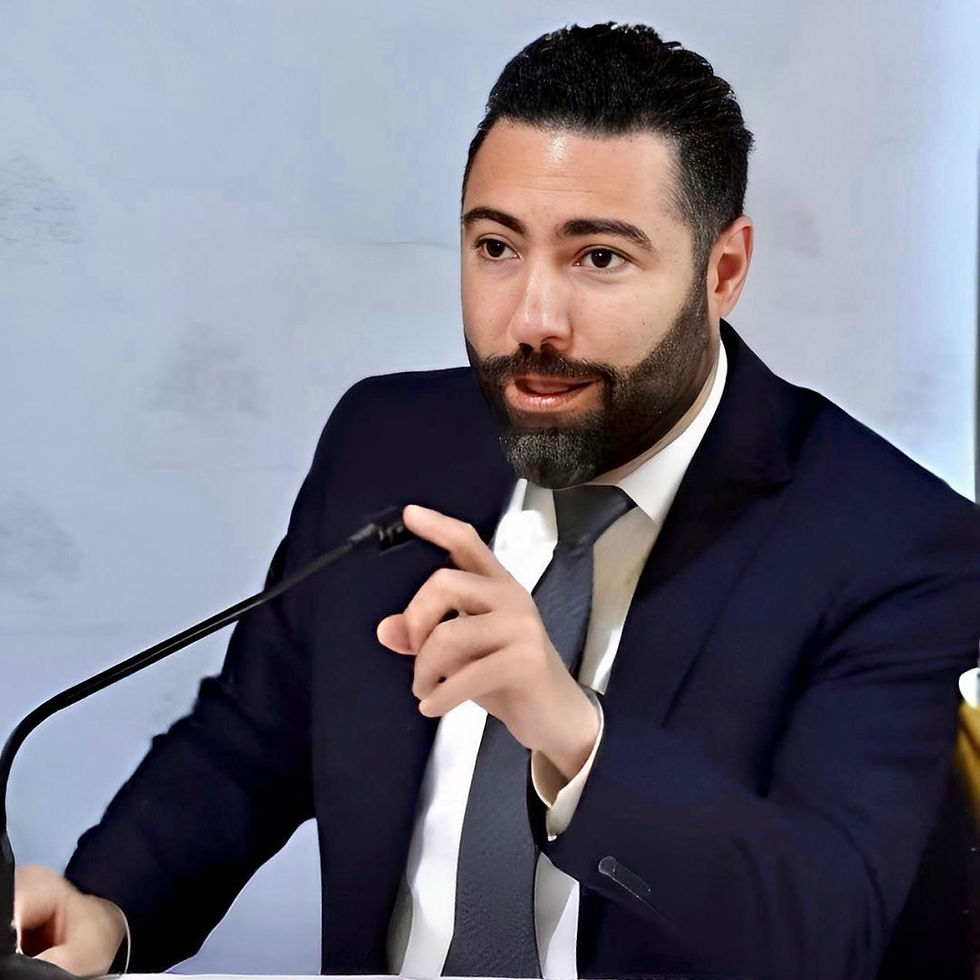
Tony Boulos is a Lebanese journalist and political analyst specializing in Middle East security and geopolitics. A frequent commentator on Arab and international TV, he provides expert insights into the region’s complex landscape. Boulos is a regular ME24 contributor, delivering strategic analysis on the most pressing issues in the Middle East.