Is Anti-Zionism a New Form of Hatred?

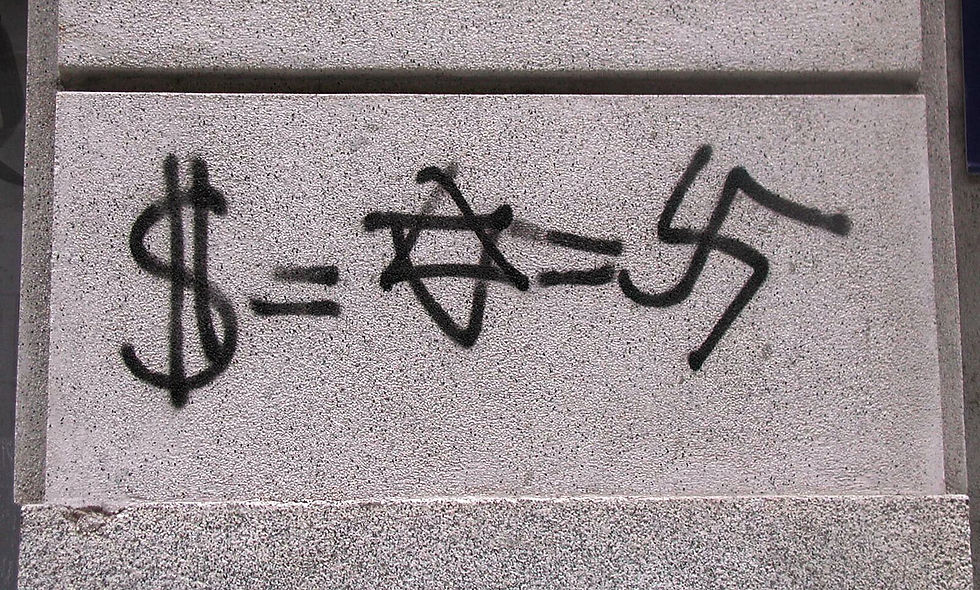
Antizionism is a hate movement that seeks to undermine and erase Jewish sovereignty in Israel and Jewish life around the globe. It perceives the State of Israel as a moral offence, targeting Jewish existence itself.
Antizionism vs. antisemitism
Antizionism can be considered a dangerous form of antisemitism, where the denial of Israel’s right to exist as a Jewish state is rooted in age-old hostility and hatred toward Jews. In addition, antizionism can be used as a cover for antisemitism.
However, it is important not to collapse antizionism into older categories, but to address it as a hate movement with its own narratives, libels, and mechanisms of violence. If antisemitism is the traditional hostility to or prejudice against Jewish people, antizionism may be considered a contemporary face of Jew-hatred.
Negationist anti-Zionism
Negationist anti-Zionism delegitimizes the Zionist project altogether, calling for the elimination of the State of Israel or any form of Jewish self-determination.
According to Prof. Ethan Katz from the University of California, Berkeley, this common form of anti-Zionism “ignores, downplays, or writes out from history the longstanding Jewish roots in the Land of Israel, the history and ongoing reality of antisemitism, and large parts of the history of Zionism and the State of Israel.”
Anti-Zionism: A new form of hatred?
Is anti-Zionism a new form of hatred? According to Adam Louis-Klein, founder of Movement Against Antizionism, the answer is yes.
Movement Against Antizionism (MAAZ) is a newly formed initiative aiming to confront anti-Zionism as the hate movement it is. Through education, advocacy, and professional training, MAAZ seeks to counter the spread of antizionist narratives, libels, denialism, and dehumanizing rhetoric.
At the same time, MAAZ strives to support Jewish communities at risk around the globe, form new collaborations and alliances, and advance the pursuit of peace based on mutual recognition and responsible dialogue.
The mission is “to critically examine and expose the structural dynamics of anti-Zionism, while affirming the dignity, security, and equal belonging of all communities—Jewish, Israeli, and Palestinian alike.”
Here's how to counter anti-Zionism
This interview with Adam Louis-Klein has been edited for clarity.
The Movement Against Antizionism is a newly formed organization. How would you describe your current activities? What have you done so far, and what are your objectives for the near future?

We are growing an organized, organic network of different people and institutions who recognize anti-Zionism as the dominant form of Jew hatred today. We demonstrate how the discrimination, harassment, and purging that Jewish people are experiencing are largely the result of anti-Zionism rather than traditional antisemitism. People are being marked as so-called Zionists; they are being labeled as supporters of genocide, of apartheid, of racism and colonialism, and it is on that basis that they are being discriminated against.
To counter this, we try to help people see anti-Zionism as its own phenomenon, instead of reducing it to classical antisemitism. We have had a very effective social media campaign and presence at protests, we are networking across the different Jewish organizations, and we teach the history of anti-Zionism as a violent ideology. First, you have to change the culture. Ultimately, we aim to establish a legal concept of antizionist discrimination, transforming it into a form of harassment punishable by law.
Antisemitism and anti-Zionism are currently at a record high, with Jews and Israelis targeted daily around the world. How did we get to this low point? Why is the fight so hard? Are there tools yet to be created and used?
The October 7 massacre stimulated Jew hatred throughout the world, but antizionist ideology had been fomenting in academia for many years before that. In the days after October 7, the entire narrative of Israel committing a genocide and indiscriminately targeting civilians was already pre-constructed and gradually mainstreamed in the liberal media.
The goal is to name anti-Zionism as the main problem and to initiate a mass campaign against it. Anti-Zionism is not the same as classical antisemitism. It has its own trail of harm. People find it difficult to see anti-Zionism as its own thing. We need to develop new tools to address this new type of Jew hatred.
How come antizionist activists are so successful as opposed to Zionist activism? So far, Zionist activism has been mostly on the defensive. Should it go on the offensive?
When faced with antizionist accusations or libels, there is a tendency within the Jewish community to go inward and to start talking about Zionism in Israel, or to spend precious time in these long, factual arguments. Meanwhile, anti-Zionists are trying to overwhelm the world with a flood of libels in order to stigmatize and demoralize us. So, we do need to go on the offensive. We need to switch from inward attention to outward attention.
Instead of always responding by talking about Israel and Zionism, we need to talk about anti-Zionism, and demand that anti-Zionism be held to account. We must find simple ways to name these libels and these behaviors, instead of responding as if it were a good-faith debate. Because we can conclusively say now that anti-Zionists are not engaged in good-faith debate. We need to deconstruct this hateful ideology, draw clear boundaries, and say out loud that it is a form of racism against Israelis and Jews.
Antizionist discourse has to be constantly challenged. It cannot be legitimized anymore as political criticism. If people talk about it and educate themselves about it, they will be able to recognize it and learn how to oppose it.
Education can be an effective tool to counter anti-Zionism. However, universities in the US and elsewhere are reluctant to let these topics into their curriculum. How would you convince them otherwise?
We aim to promote education about anti-Zionism and support institutions that study it. For example, the Institute for the Critical Study of Antizionism which was recently founded by Prof. Andrew Pessin at Connecticut College. The institutional takeover of the academy by anti-Zionists should be pushed back by creating serious spaces of reflection about anti-Zionism itself. One can do that entirely within the bounds of academic freedom. Jewish organizations should start funding critical studies of anti-Zionism. We will also try to convince the state to provide funding.
What role does the community have in countering anti-Zionism? How would it be possible to gain the support of both Jewish and non-Jewish communities around the world?
The support of non-Jewish communities is crucial. In order to get them on board, we must make it clear that supporting us does not mean being a Zionist; it means rejecting anti-Zionism as a form of racism and a hate movement that harms Israelis, Jews, and Palestinians. Anti-zionists are encouraging only the extremist Palestinian voices, while sidelining the moderates. To counter this, we should create spaces for responsible dialogue between Jews and Palestinians. Anti-Zionism harms both Jews and Palestinians. If people care about both groups, they should oppose anti-Zionism.
As of today, social media is strongly dominated by antizionist discourse. How do you plan to take on this hostile arena?
Our trainings provide people with tools and guidance on how to discuss on social media, how to respond in cases of online harassment and anti-Zionist accusations. Instead of debating, we train users to create boundaries and name libels. Once they expose antizionist libels for what they are, they can shut them down.
MAAZ’s team is mainly composed of academics, ranging from anthropologists and historians to scholars of antisemitism, law, and philosophy. What are the benefits of tackling anti-Zionism from an academic standpoint?
Anti-Zionist ideology was formulated in academia. This is why we develop a framework that uses the academic language and concepts of anti-Zionism against itself. We need to speak in the language of antizionists in order to counter them. We need to develop an academic theorization of anti-Zionism, and then to pair that with more simple slogans and messages. The recipe for success is to combine academic discourse with short and catchy messages that can go viral on social media.

Ofek Kehila (Israel, 1987) is a scholar of Spanish Golden Age literature and Latin American literature of the 20th and 21st centuries. His research bridges the gap between those traditions, highlighting their aesthetic, cultural, and historical dialogue. He holds a PhD from the Hebrew University of Jerusalem (2022) and was a postdoctoral fellow at Freie Universität Berlin (2023-2025).