Iran's Missile Arsenal in the 2026 Conflict
Updated: Oct 5
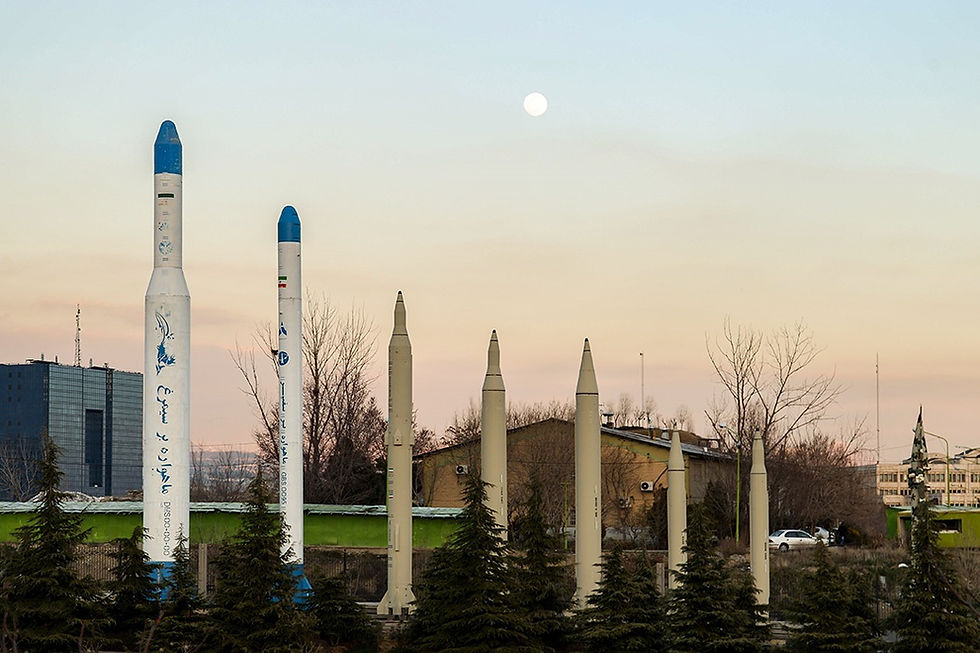
The Iranian Regime’s missile program has long been a cornerstone of its military strategy, enabling asymmetric warfare against superior adversaries like the United States and Israel. Amid the escalating 2026 conflict, dubbed Operation Epic Fury by the US and Roaring Lion by Israel, Iran's ballistic and cruise missiles have played a pivotal role in retaliatory strikes across the Middle East. This is ongoing while the Ayatollah was killed, and while Iranians align with Israel in protests against the regime. This article examines the size of Iran's stockpile, the number of missiles fired, and their potential to extend the war.
How Many Missiles Does Iran Have?
Estimates of Iran's missile inventory vary, but recent assessments place it at around 2,500 ballistic missiles, though ongoing strikes are rapidly depleting this arsenal. According to a CNN analysis, Iran maintains a "huge stockpile" of short- and medium-range ballistic missiles, with production exceeding 100 per month, as stated by Secretary of State Marco Rubio: “Iran is ‘producing, by some estimates, over 100 of these missiles a month.’” This capability allows Tehran to replenish losses, but U.S. and Israeli airstrikes have destroyed hundreds of missiles and launchers.
Haaretz reports that Iran still possesses "hundreds of missiles capable of hitting Israel," but its arsenal is "gradually being depleted" due to damage to production sites and launchers. The Israel Defense Forces assessed Iran's stockpile at approximately 2,500 ballistic missiles prior to the latest escalation, with efforts to accelerate production from 3,000 to 8,000 within two years.
Bloomberg notes Iran has about half a dozen variants of short- and medium-range missiles, plus cruise missiles, forming the Middle East's largest arsenal. However, post-2025 war estimates suggest depletion to 1,500-2,000 missiles, with recent strikes halving launchers.
How Many Missiles Has Iran Fired in the 2026 War?
Iran has unleashed significant firepower in the 2026 war, firing over 500 ballistic missiles and 2,000 drones in retaliation, per CNN: Adm. Brad Cooper reported, “The Iranian military had launched more than 500 ballistic missiles and over 2,000 drones in response to the US and Israeli attacks.” This includes strikes on Israel, U.S. bases in the Gulf, and regional allies.
Haaretz details a sharp decline, with launches dropping by two-thirds after the first day: "It's unlikely that Iran will be able to replicate the volume of launches it conducted on the first day of the war." Reuters reports Iran fired 170 ballistic missiles at Israel and U.S. bases on February 28 alone. Al Jazeera notes ongoing strikes wounding civilians in Jerusalem and hitting Tehran. Overall, Iran has targeted at least six countries, with drones proving effective in evading defenses.
Can Iran Sustain Its Missile Attacks?
Iran's missiles could theoretically extend the conflict through attrition, but degrading stockpiles limit this. CNN warns of a "math problem" for U.S. resupply: Sen. Mark Kelly said, “At some point … this becomes a math problem and how can we resupply air defense munitions.” Yet, US operations are curbing Iran's firing rate.
Haaretz argues depleted arsenals reduce high-intensity sustainability: "The arsenal is depleting, making high-volume launches unlikely going forward." The New Arab suggests Iran may hold back prized missiles to exhaust defenses in a prolonged war. Brookings notes that drones are more effective than missiles in evading defenses, potentially straining interceptors. However, Understanding War reports U.S.-Israeli strikes have halved launchers, hindering coordinated barrages.
Wrap Up
While Iran's missiles pose a persistent threat, rapid degradation and production disruptions suggest a limited ability to prolong the war indefinitely.The conflict's trajectory hinges on sustained coalition pressure, potentially leading to regime weakening or escalation.

Uri Pilichowski is an author, speaker, and senior educator at institutions around the world.